Abhijit Wanjarri Retains Nagpur MLC Seat: Five Factors Behind Congress’ Victory in BJP Stronghold
Congress leader Abhijit Wanjarri has retained the Nagpur Division Graduates’ Constituency seat in the Maharashtra Legislative Council, defeating BJP c...
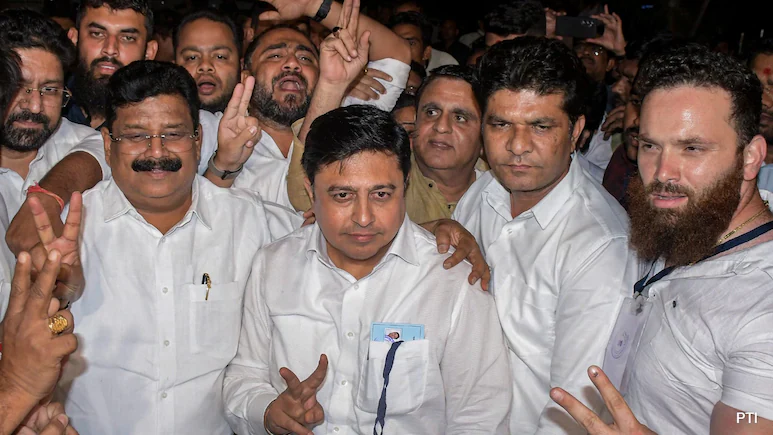
Congress leader Abhijit Wanjarri has retained the Nagpur Division Graduates’ Constituency seat in the Maharashtra Legislative Council, defeating BJP candidate Sudhakar Kohale by 3,271 votes. The result is significant because Nagpur has long been associated with the BJP and is also the headquarters of the Rashtriya Swayamsevak Sangh (RSS).
Wanjarri secured 67,231 votes, while Kohale received 63,960. The counting process lasted more than 40 hours, with the final outcome depending on the distribution of preference votes.
The victory also marked Congress’s only win in the latest round of Legislative Council elections across four states. Several factors contributed to the closely contested outcome.
1. Second-Preference Votes Changed the Result
Independent candidate Nitesh Karale emerged as an important factor in the Nagpur contest, securing approximately 24,249 votes.
Under the preferential voting system used for graduates’ constituency elections, voters can indicate candidates in order of preference. Since neither of the leading candidates initially secured the required quota, the counting process moved beyond first-preference votes.
Karale's second-preference votes largely benefited Wanjarri, helping him overtake Kohale. This gave Congress an advantage in the later stages of counting and demonstrated the importance of planning for multiple rounds of preference voting.
2. A Large Number of Invalid Ballots
The election recorded 1,65,906 votes, of which 15,032 were declared invalid. This was higher than the 11,540 invalid ballots recorded in the 2020 election.
Reports indicated that thousands of ballot papers contained incorrect preference markings, including cases where voters entered multiple preference numbers against a candidate's name.
Such errors can significantly affect a close contest because invalid ballots are excluded from the counting process. The unusually high number therefore became an important feature of the Nagpur result.
3. Internal Discontent Within the BJP
The BJP also faced organisational challenges during candidate selection. The decision to nominate Sudhakar Kohale reportedly created dissatisfaction among some local party members.
Former MLC Anil Sole, who had represented the constituency between 2014 and 2020, entered the contest as an Independent after being denied the BJP ticket. Although he later withdrew from active campaigning, his name remained on the ballot because the withdrawal deadline had passed.
Sole received more than 200 votes. His candidature reflected internal differences over the party's selection process and raised questions about coordination among local workers.
4. Wanjarri's Long-Term Engagement With Graduates
Wanjarri's previous six-year tenure appears to have played an important role in retaining voter support. Rather than relying exclusively on high-profile campaigning close to polling day, he had maintained contact with graduate voters across the Vidarbha region.
His association with educational institutions, university bodies and teachers' organisations helped him develop relationships with sections of the electorate.
Reports also highlighted support from around 35 teachers' organisations. His connections with academic networks and sustained outreach provided an organisational advantage during the campaign.
5. Campaign Strategy and Voter Awareness
The BJP campaign received considerable attention, with Maharashtra Chief Minister Devendra Fadnavis and Union Minister Nitin Gadkari actively campaigning for Kohale.
However, Wanjarri's campaign focused on his previous work and existing voter network. He later said that the BJP had attempted to follow the approach he had developed during his earlier tenure.
The election also exposed gaps in voter awareness about preferential voting. Despite the electorate consisting of registered graduates, thousands of ballots were rejected because of incorrect markings.
Clearer communication about the voting procedure could have reduced such errors and helped voters understand how to record their preferences correctly.
What the Result Means for Maharashtra Politics
Wanjarri's victory extends Congress's representation in the Nagpur graduates' constituency for another six-year term. It also represents a setback for the BJP in a seat historically associated with its political influence.
The wider Maharashtra Legislative Council results were mixed. The Maha Vikas Aghadi secured three of the five seats contested, while the ruling Mahayuti alliance won the remaining two.
The Nagpur outcome demonstrates how candidate selection, sustained constituency-level engagement, internal party coordination and preferential voting can influence a closely fought election.
For Congress, the result offers an important victory in a politically significant region. For the BJP, it raises questions about its local organisation and campaign strategy ahead of future electoral contests.
Related Stories
Reader comments are moderated as per Daily News Axis editorial standards.