
US Court Orders Trump to Stop Taxpayer-Funded Political Ads
A US federal judge has ordered President Donald Trump’s administration to stop airing television advertisements funded by public money that promote hi...
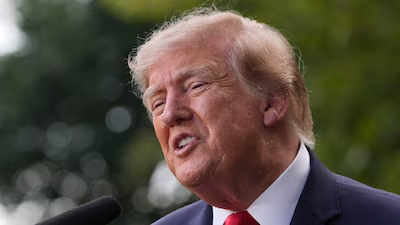
A US federal judge has ordered President Donald Trump’s administration to stop airing television advertisements funded by public money that promote his political message, intensifying a legal dispute over the use of government resources for presidential publicity ahead of the November 2026 midterm elections.
US District Judge Jennifer L. Rochon issued a temporary restraining order on October 11, directing the administration to cancel any remaining broadcasts of the advertisements and prohibiting new or expanded agreements for their production and distribution during the order’s 14-day period. The decision followed a lawsuit arguing that the campaign crossed the line between legitimate government communication and political promotion.
The ruling came as the administration indicated that the advertising campaign was already approaching its scheduled conclusion. However, the judge’s order requires the government to stop further broadcasts rather than rely solely on its stated plans to end the campaign.
Why the Court Challenged the Advertisements
The US Department of Homeland Security allocated $20 million in taxpayer funds for the advertising campaign. The administration defended the spending as an effort to communicate government policies and promote its work, but critics argued that the commercials resembled political messaging rather than conventional public service announcements.
The advertisements began airing in late September and included footage of Trump discussing political issues and presenting his administration’s agenda. Some of the material echoed themes associated with his previous presidential campaign.
The dispute centres on whether federal agencies can use money approved by Congress for government-related purposes to finance advertisements that primarily advance a president’s political message. Federal law restricts the use of appropriated funds for unauthorised publicity or propaganda, although agencies can spend public money on legitimate communications about their programmes and policies.
The court has temporarily restricted the campaign while the legal challenge proceeds. The order does not, by itself, represent a final determination of every allegation raised in the lawsuit.
Watchdog Groups Challenge Government Spending
The case was brought by a coalition that included government watchdog organisation Common Cause, a public-sector workers’ union and an Alabama state legislative candidate. The plaintiffs argued that the advertisements improperly used public resources to advance political objectives during an election period.
Their legal challenge raised concerns about the distinction between informing the public about government services and using taxpayer-funded communications to strengthen a political figure’s image.
The Department of Justice had argued that an emergency court order was unnecessary because the advertising campaign was scheduled to end. Judge Rochon nevertheless directed the administration to halt any remaining broadcasts, including those planned for the evening of October 11.
The Democratic National Committee has also pursued a separate legal challenge concerning the advertisements, adding another front to the dispute over how federal funds were used.
Trump Says Future Advertising Will Use Political Funds
Trump previously defended the advertisements as positive promotion of the country and indicated that future broadcasts would be financed through political fundraising rather than taxpayer money.
However, questions remain about the public funds already spent on the campaign. The administration has not confirmed that it will reimburse the government for money used before the court order.
The distinction matters because changing the source of funding for future advertisements would not automatically resolve questions about whether the original expenditure complied with federal law.
What Happens Next?
The temporary restraining order is due to remain in effect for 14 days, giving the court time to consider the dispute further. The case could have broader implications for the limits on government-funded political communication and the oversight of federal spending.
For the Trump administration, the immediate requirement is to comply with the court’s restrictions. For the plaintiffs, the next stage will involve pressing their argument that public funds must be used for authorised government purposes rather than political promotion.
The outcome could help clarify how far a president and federal agencies can go when using publicly funded advertising to communicate policy messages during an election season.
Related Stories

Reader comments are moderated as per Daily News Axis editorial standards.










