Beyond the Startup Playbook: An Exclusive Conversation with Pratham
An exclusive conversation with young Indian founder Pratham on independent thinking, entrepreneurship, ambition, and building with conviction in a rap...
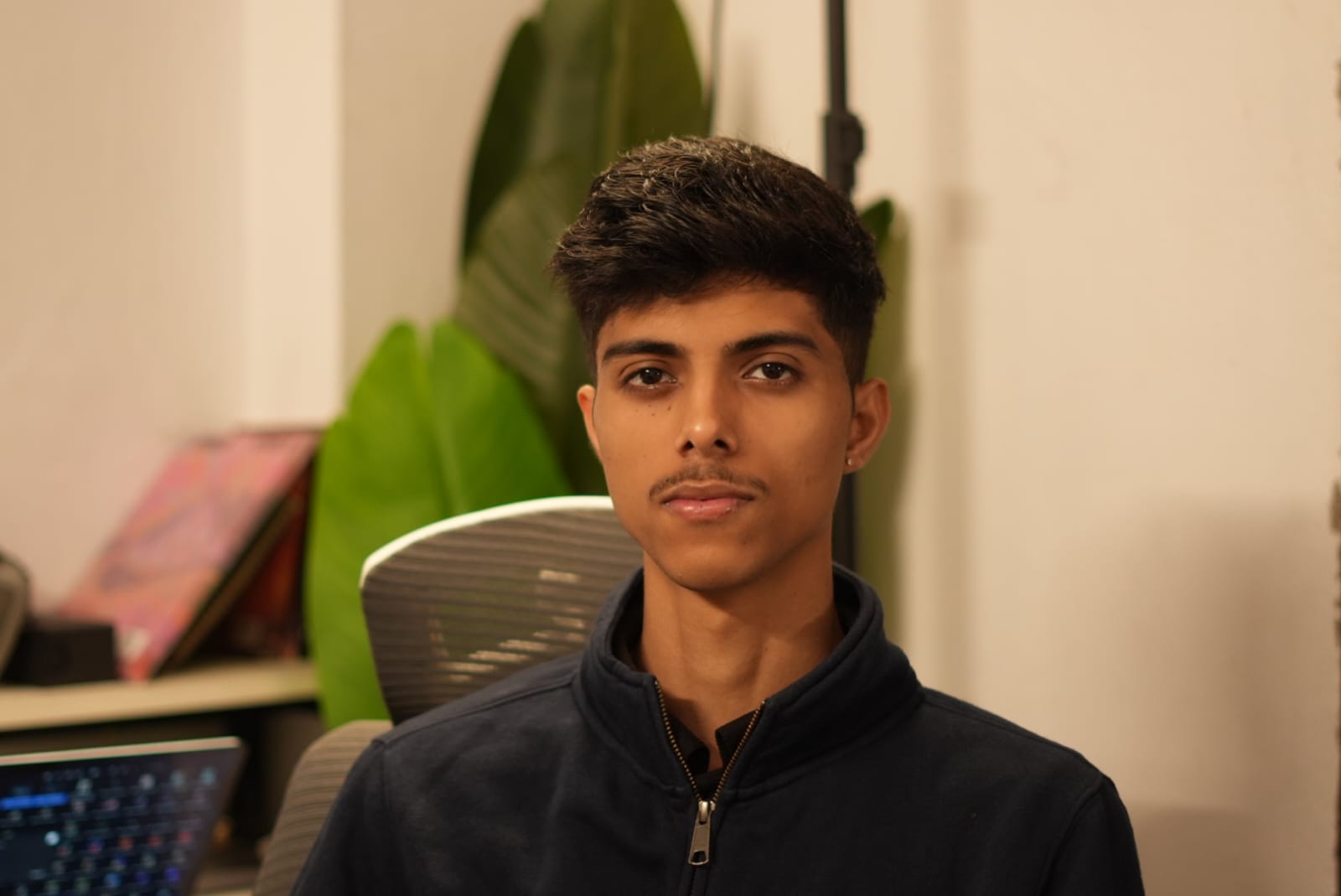
An exclusive conversation with young Indian founder Pratham on independent thinking, entrepreneurship, ambition, and building with conviction in a rapidly changing world.
Interviewer: Saanvi Malhotra
“Building something meaningful begins with questioning what already exists.”
Saanvi Malhotra: Many young entrepreneurs enter the startup ecosystem with a clear ambition to build a successful company. What drew you towards entrepreneurship, and what does building mean to you personally?
Pratham: For me, it began with curiosity. I have always wanted to understand how things work, why certain ideas succeed, and how technology influences the way people live and think. Over time, that curiosity developed into a desire to create something of my own. I did not want to spend my life simply observing what others were building. I wanted to experiment, solve problems, and turn ideas into something useful. Entrepreneurship gives me the freedom to explore those possibilities. I see building as a continuous process of learning, questioning assumptions, and taking responsibility for an idea beyond the point where it exists only in your imagination.
Saanvi Malhotra: The startup ecosystem has established playbooks for almost everything, from product development to fundraising. Why do you believe founders need to look beyond them?
Pratham: Playbooks are valuable because they allow us to learn from experience. But they become limiting when people follow them without understanding the reasoning behind them. Every market has its own dynamics, every generation has different expectations, and every meaningful problem requires a slightly different approach. Especially in technology, the environment changes too quickly for any single framework to remain universally relevant. I believe founders should learn the fundamentals, understand the principles that have worked, and then develop their own judgment. The objective should not be to do something differently simply for the sake of being different. It should be to understand a problem so deeply that your approach emerges from that understanding.
Saanvi Malhotra: You are building TrueByte around the idea of technology intelligence. What led you to this particular space?
Pratham: Technology is becoming central to almost every aspect of modern life, yet understanding it remains difficult for many people. We use digital products, interact with algorithms, and increasingly rely on artificial intelligence without necessarily understanding the systems behind them. At the same time, the internet gives us access to enormous amounts of information, but access alone does not guarantee understanding. TrueByte comes from the belief that technology should be easier to comprehend, especially for people who are not necessarily from technical backgrounds. I want to explore how complex technological ideas can be made more accessible without losing their depth. For me, technology intelligence is about understanding how things work, why they matter, and how they shape the world around us.
Saanvi Malhotra: Artificial intelligence is lowering the barriers to building products and businesses. Does this mean the next generation of entrepreneurs will have a fundamentally different advantage?
Pratham: Absolutely, although I think the advantage is changing rather than disappearing. AI allows individuals and small teams to accomplish things that previously required more time, resources, or specialised capabilities. That creates opportunities for people who might not have had access to traditional systems of innovation. However, access to tools does not automatically translate into meaningful outcomes. When more people can build quickly, the ability to identify the right problem becomes even more important. Judgment, creativity, customer understanding, distribution, and execution will continue to distinguish successful ventures. AI can accelerate the process, but the quality of the thinking behind what you build still matters enormously.
Saanvi Malhotra: At a young age, there can be pressure to establish credibility quickly. How do you approach the relationship between ambition and patience?
Pratham: I think ambition and patience need to exist together. Ambition gives you a reason to pursue something difficult, while patience allows you to work through the time it takes to make it meaningful. There is a tendency to compare your progress with the visible achievements of other people, particularly in an environment where everything is constantly documented. But the timelines we see publicly rarely tell the complete story. I want to build things that can sustain themselves, evolve, and create lasting value. That requires urgency in execution but patience with outcomes. You can move quickly without expecting everything to happen immediately.
Saanvi Malhotra: What has building taught you about failure that you could not have learned through observation alone?
Pratham: It has taught me that conviction and correctness are two different things. You can believe deeply in an idea and still discover that your assumptions are wrong. When you build something, reality gives you feedback that theory cannot always provide. People may use your product differently than you expected, a problem you considered important may not be urgent for customers, or a solution that looks elegant internally may not work in practice. You have to be willing to recognise those gaps without becoming personally attached to being right. I think one of the most important skills a founder can develop is the ability to change direction without losing sight of the larger purpose.
Saanvi Malhotra: Entrepreneurship is often portrayed through milestones, launches, and achievements. What do you think that portrayal leaves out?
Pratham: It leaves out the ordinary days. Building something is often less glamorous than people imagine. A large part of the process involves research, repetition, problem-solving, difficult decisions, and work that may never become visible externally. There are periods when progress is obvious and others when you are simply trying to understand what is not working. I have also come to appreciate that activity and progress are not the same thing. You can spend an entire day doing things and still avoid the one decision that matters most. Learning to distinguish between the two is important. Ultimately, what matters is whether the work creates value, not just whether it creates the appearance of momentum.
Saanvi Malhotra: You speak about independent thinking as an important part of building. How does that principle apply in an age where AI can generate answers to almost any question?
Pratham: I think independent thinking becomes more important as answers become easier to obtain. AI can help us explore unfamiliar subjects, examine possibilities, and work through complex questions. But we still need to decide which questions are worth asking, how reliable an answer is, and what conclusions we should draw from it. There is a difference between having information available and developing an informed perspective. I do not think independent thinking means rejecting technology or refusing to learn from others. It means using those resources without surrendering your judgment to them. The ability to evaluate information, question assumptions, and connect ideas meaningfully will become increasingly valuable.
Saanvi Malhotra: What would you say to someone who has an ambitious idea but feels they lack the resources, experience, or confidence to begin?
Pratham: I would tell them to start by reducing the size of the first step, not the scale of the ambition. You do not need to build the complete version of an idea immediately. Identify a problem, understand who experiences it, and create the smallest useful solution you can. Then put it in front of real people and learn from their response. You will probably discover things you did not anticipate, and that is part of the process. Resources matter, experience matters, and preparation matters, but none of them can replace the learning that comes from actually doing the work. You do not have to feel completely ready before you begin. You have to be willing to learn as you go.
Saanvi Malhotra: Looking ahead, what do you hope people will associate with your work beyond the businesses or products you build?
Pratham: I hope they associate it with curiosity, clarity, and the willingness to make difficult ideas more accessible. Technology is often presented as something that only specialists can understand, but I believe more people should be able to engage with it meaningfully. Understanding technology gives people greater agency in a world increasingly shaped by digital systems. Through TrueByte and whatever I build in the future, I want to contribute to that understanding. I also want to remain open to changing my perspective as I learn more. I do not think a founder's identity should be limited to one product or one company. What matters more is the quality of the problems you choose to work on and the value you create through that work.
Saanvi Malhotra: Finally, if you could define the philosophy that guides you as a founder in one thought, what would it be?
Pratham: Build with conviction, but remain willing to question yourself. Have a clear sense of what you want to create, but do not become so attached to your original idea that you stop learning from reality. The world is changing too quickly for anyone to assume they have everything figured out. I would rather continue asking better questions, developing better judgment, and building things that become more useful over time. For me, the journey is not about having the perfect plan from the beginning. It is about having the courage to start, the discipline to continue, and the humility to improve.
Beyond the Conversation
For Pratham, entrepreneurship is not simply about following a familiar formula for success. It is about developing an independent perspective, learning through execution, and understanding the systems that increasingly shape modern life. Through TrueByte, he is pursuing the idea that technology intelligence can make complex concepts more accessible to a wider audience. His broader philosophy centres on curiosity, conviction, and a willingness to keep learning in a world where the tools may change rapidly, but the need for thoughtful problem-solving remains.
Related Stories


Reader comments are moderated as per Daily News Axis editorial standards.