India’s Global Rise: Why New Delhi Rejects the ‘Middle Power’ Label
India’s growing economic scale, expanding diplomatic reach and independent foreign policy have intensified debate over how the country should be class...
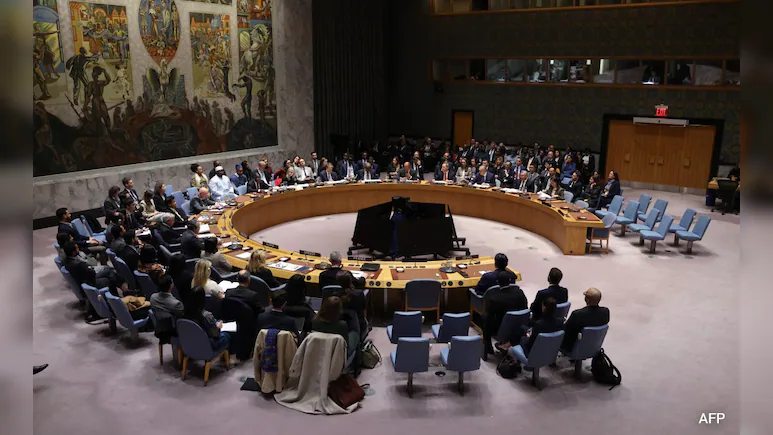
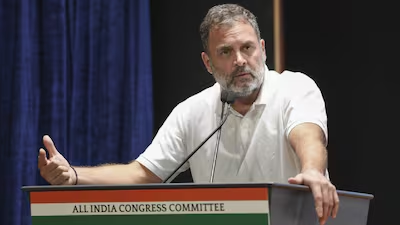
India’s growing economic scale, expanding diplomatic reach and independent foreign policy have intensified debate over how the country should be classified in the changing international order. External Affairs Minister S. Jaishankar has argued that describing India as a “middle power” understates its position, highlighting the country’s size, economic potential and ability to influence global affairs.
The discussion gained fresh attention during the Bloomberg New Economy Forum in New Delhi in October 2026. Jaishankar’s remarks reflected a broader Indian foreign policy ambition: to participate in shaping international decisions rather than being confined to a category traditionally associated with countries that have influence but limited ability to set the global agenda.
The distinction matters as competition between the United States and China reshapes trade, technology, energy security and international diplomacy.
Why India Challenges the Middle Power Classification
The term “middle power” generally describes countries that can influence international affairs but do not possess the same global reach as the largest powers. Such countries often work through diplomatic coalitions and multilateral institutions to advance shared interests.
India’s position is different in several respects. It has the world’s largest population, a substantial domestic market, nuclear capabilities and an expanding role in international economic and security discussions. Its economic growth prospects also give it increasing importance in decisions involving investment, manufacturing and global supply chains.
For New Delhi, the middle-power label risks overlooking these characteristics and the country’s ambition to exercise greater influence over the international system.
Jaishankar has instead presented India as a country that occupies a strategically important position between competing centres of power. This reflects its ability to maintain relationships with different partners while pursuing its own national priorities.
However, a country’s classification is not simply a matter of terminology. Its international influence also depends on economic strength, technological capabilities, military readiness and the ability to translate diplomatic relationships into concrete outcomes.
Strategic Autonomy Remains Central to Indian Foreign Policy
India’s approach to international partnerships is shaped by its longstanding emphasis on strategic autonomy. Rather than aligning itself completely with one major power, New Delhi seeks to preserve room for independent decisions on trade, defence, energy and regional security.
This approach can be seen in India’s participation in both the Quad, which includes the United States, Japan and Australia, and BRICS, a grouping that brings together major emerging economies, including China and Russia.
Although the two forums have different objectives, India uses each to pursue specific interests. Cooperation with the Quad supports engagement on Indo-Pacific security and critical technologies, while BRICS provides a platform for discussions on global economic governance and the representation of developing countries.
Such participation can appear contradictory when international relations are viewed primarily through the lens of rival blocs. India’s position, however, reflects an effort to avoid excessive dependence on any single partner.
Maintaining this flexibility becomes more difficult when geopolitical tensions affect access to technology, financial networks, energy supplies and essential industrial materials.
Economic Strength Must Support Global Ambitions
India’s growing economy provides an important foundation for its international aspirations. A large domestic market, expanding services sector and efforts to strengthen manufacturing have increased the country’s relevance to businesses and governments worldwide.
Yet economic size alone does not guarantee great-power influence. Sustained industrial development, research and innovation, infrastructure investment and a stronger domestic production base remain important to converting growth into strategic leverage.
Dependence on imported technologies or critical components can limit a country’s choices during periods of international tension. Similarly, weaknesses in manufacturing competitiveness can make it harder to benefit fully from shifts in global supply chains.
India therefore faces the task of matching its diplomatic ambitions with stronger domestic capabilities. Greater economic resilience would give New Delhi more options when negotiating with larger partners and responding to external pressure.
A Changing World Order Creates New Opportunities
The debate over India’s status is unfolding as international institutions face pressure and major powers increasingly use trade, technology and financial access as instruments of influence.
For India, this environment creates opportunities to build partnerships across regions and contribute to debates on global governance. It also increases the importance of maintaining reliable economic foundations and credible diplomatic relationships.
Whether India is described as a rising great power or a strategically positioned global actor, the central question is how effectively it can turn its scale into influence.
New Delhi’s rejection of the middle-power label signals its ambition to play a larger role in shaping international affairs. Achieving that objective will depend not only on diplomatic messaging but also on sustained economic development, technological progress and the ability to make independent choices when global interests collide.
Related Stories


Reader comments are moderated as per Daily News Axis editorial standards.