
INDIA Bloc to March to Supreme Court Over ‘Vote Chori’ Allegations, Demands Gyanesh Kumar’s Resignation
Opposition parties under the INDIA bloc are set to march to the Supreme Court in New Delhi on October 12, intensifying their campaign against alleged ...
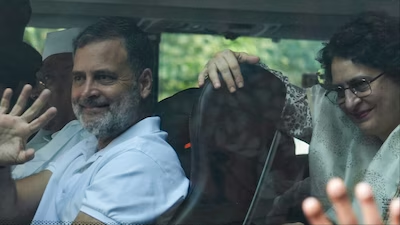
Opposition parties under the INDIA bloc are set to march to the Supreme Court in New Delhi on October 12, intensifying their campaign against alleged electoral irregularities and the Special Intensive Revision (SIR) of voter lists. Led by Congress leaders Rahul Gandhi and Mallikarjun Kharge, the protest is expected to focus on demands for Chief Election Commissioner Gyanesh Kumar’s resignation, a halt to the voter-list revision exercise and a return to paper ballots.
The planned demonstration, titled “Chalo Delhi – March for Democracy,” comes amid growing political tensions over the functioning of the Election Commission and allegations of manipulation in the electoral process. The opposition intends to submit a memorandum to Chief Justice of India Surya Kant, seeking judicial attention to its concerns.
However, the proposed meeting with the Chief Justice has been declined, adding another development to the political dispute ahead of the march.
CJI Surya Kant Declines Meeting Request
Rahul Gandhi and Kharge had requested an appointment with the Chief Justice between 4 pm and 5 pm on Monday to present their memorandum. The request was turned down on the grounds that the issues raised by the opposition were already pending before the Supreme Court.
According to reports, the Chief Justice indicated that the concerns should be pursued through the appropriate judicial process rather than through an administrative meeting. The distinction reflects the separation of powers between the judiciary and the executive, particularly when matters involving constitutional authorities are under consideration.
The opposition leaders can still approach the court through legal proceedings. Their request for a meeting and the planned march are separate from any formal petition that may be filed for judicial consideration.
What the Opposition Wants
The INDIA bloc’s proposed memorandum centres on three major demands: action over alleged “vote chori,” the resignation of Gyanesh Kumar and suspension of the Special Intensive Revision of electoral rolls.
Opposition parties have repeatedly questioned the voter-list revision process, arguing that electoral procedures must remain transparent and protect every eligible citizen’s right to vote. They have also called for a return to paper ballots, making the format of voting another point of contention in the broader dispute.
Rahul Gandhi has appealed to opposition parties, young people, civil society organisations and citizens to participate in the march. The mobilisation is intended to bring together groups beyond individual political parties and present their concerns about electoral integrity.
The opposition has previously raised related issues with President Droupadi Murmu, indicating that its campaign is continuing across multiple constitutional forums.
SIR Process at the Centre of the Dispute
The Special Intensive Revision is a process for reviewing and updating electoral rolls. The opposition’s objections concern how the exercise is conducted and whether it could affect eligible voters.
Opposition leaders argue that voter-list changes require scrutiny and adequate safeguards. Their concerns have contributed to an escalating confrontation with the Election Commission, with the demand for the Chief Election Commissioner’s resignation becoming a central feature of their protests.
The allegations remain disputed, and claims of electoral wrongdoing should not be treated as established findings without supporting evidence or a formal determination by the relevant authority.
Security and Political Tensions in Delhi
The proposed march follows days of demonstrations in the national capital over the same controversy. Earlier protests and police action have added to tensions between opposition parties and the authorities.
The latest mobilisation is expected to draw attention to both the political allegations and the opposition’s attempt to bring the matter before the country’s highest court. The planned gathering also comes as questions about voter-list revision and the Election Commission’s role remain prominent in the political debate.
The immediate focus will be whether the INDIA bloc proceeds with its march and how it seeks to advance its demands after the Chief Justice declined the requested meeting. The next steps could include formal legal action, depending on the course chosen by the opposition.
At the heart of the dispute is a larger question about electoral transparency, the independence of constitutional institutions and the mechanisms available to address allegations concerning the voting process.
Related Stories


Reader comments are moderated as per Daily News Axis editorial standards.








