Zelenskyy Condemns Trump’s Russia Diesel Deal, Accuses Putin of Blocking Genuine Peace Efforts
Ukrainian President Volodymyr Zelenskyy has criticised US President Donald Trump’s agreement to secure diesel supplies from Russia, warning that the a...
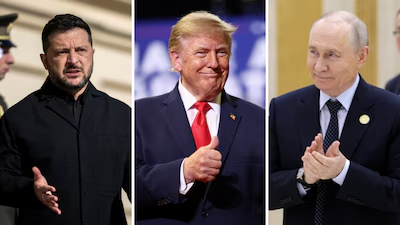
Ukrainian President Volodymyr Zelenskyy has criticised US President Donald Trump’s agreement to secure diesel supplies from Russia, warning that the arrangement could provide Moscow with additional revenue to sustain its war against Ukraine. Speaking at a European Union summit in Brussels on October 16, Zelenskyy also questioned Russian President Vladimir Putin’s commitment to peace negotiations and called for stronger European backing for Kyiv.
The dispute comes as Washington and Moscow pursue energy-related arrangements alongside diplomatic efforts to end the war. The agreement has heightened tensions between the United States and Ukraine, while European governments face growing pressure to maintain financial and military assistance to Kyiv.
Zelenskyy Warns of Financial Benefits for Moscow
Zelenskyy argued that purchases of Russian diesel could undermine efforts to restrict the Kremlin’s resources during the conflict. In his view, additional energy revenue could help Russia finance military operations rather than encourage it to make meaningful concessions at the negotiating table.
Trump has defended the arrangement as a way to increase fuel supplies and ease pressure on prices in the United States. The American president has also criticised Ukrainian attacks on Russian oil refineries, describing them as damaging to efforts to stabilise energy markets.
The opposing positions reflect a wider disagreement over how economic pressure and military operations should be used to bring the war to an end. Kyiv maintains that reducing Russia’s revenue is important to limiting its capacity to continue fighting, while Trump has placed greater emphasis on fuel costs and reaching a negotiated settlement.
Putin’s Peace Position Draws Fresh Criticism
Addressing the European gathering, Zelenskyy said Russia’s approach to negotiations did not demonstrate a genuine willingness to end hostilities. He described Moscow’s position as a parody of peace efforts, arguing that statements about diplomacy were not matched by actions on the ground.
Putin, meanwhile, has said Russia is establishing a security zone inside Ukrainian territory along the countries’ border. Moscow has presented the move as a security measure, while Kyiv views Russia’s continued military operations as evidence that the conflict remains far from a resolution.
The disagreement highlights the substantial gap between the two sides over security arrangements, territorial control and the conditions required for a lasting settlement. Any peace initiative will need to address these issues, as well as the question of how compliance with an agreement would be monitored.
European Leaders Rally Around Ukraine
At the Brussels summit, Zelenskyy welcomed the prospect of European countries taking a larger role in diplomatic discussions. He referred to European leaders as genuine leaders and urged them to maintain their commitment to Ukraine as uncertainty grows over the future direction of US policy.
He also called for at least €70 billion in additional European support for 2027, saying Ukraine would face substantial costs for defence and military equipment. The appeal comes as Kyiv prepares for another difficult winter, with continued threats to energy infrastructure and civilian areas.
European leaders reiterated their support for Ukraine, although disagreements remain among EU member states over funding, energy policy and the bloc’s longer-term financial commitments.
Military Technology and Energy Security Add to Concerns
Zelenskyy also raised concerns about continuing disruptions affecting the Starshield satellite system, which Ukraine uses for military communications and battlefield operations. The system is important for coordinating defence activities, including efforts to counter Russian drone attacks.
The combination of uncertainty over satellite support, disputes over Russian fuel revenue and the cost of sustaining the war presents further challenges for Kyiv. Ukraine’s government is seeking to strengthen European cooperation while continuing to press for measures that limit Russia’s ability to wage war.
The latest exchange leaves diplomatic efforts under strain. Whether the diesel agreement becomes a temporary energy arrangement or a broader obstacle to negotiations will depend on how Washington, Moscow, Kyiv and European capitals handle their competing priorities in the weeks ahead.
Related Stories


Reader comments are moderated as per Daily News Axis editorial standards.