
Signify CEO Confirms Philips Brand Will Continue in India, Focus Shifts to Smart Lighting
Philips lighting products will continue to be sold under the familiar Philips name in India, with Signify maintaining its commitment to local manufact...
Philips lighting products will continue to be sold under the familiar Philips name in India, with Signify maintaining its commitment to local manufacturing, product development and research, CEO As Tempelman has confirmed. The company is also pursuing major infrastructure projects, including street lighting in Delhi, while exploring how connected lighting and artificial intelligence could change the way buildings and public spaces are managed.
Signify, which became the independent company behind Philips lighting products after a corporate rebranding in 2018, continues to operate in India under the Philips brand. Tempelman described the country as a market requiring its own approach, supported by domestic production, locally developed products and established distribution relationships.
The strategy comes as India's rapid adoption of LED lighting has changed the industry's growth prospects. With many conventional bulbs already replaced, companies increasingly need to find opportunities in smart lighting, connected infrastructure and specialised commercial installations.
Philips Brand to Remain Central to India's Lighting Market
For Indian consumers, the Philips name remains closely associated with bulbs, tube lights and other household lighting products. Signify intends to preserve that familiarity while using its corporate identity more prominently in business-to-business markets.
The company serves both household buyers and large institutional customers, including stadium operators, businesses and public authorities. Its consumer products continue to rely on established retail and distribution networks, while its professional business targets larger infrastructure and commercial projects.
Signify has developed a substantial local presence, including manufacturing operations, an India-specific product portfolio and a major research centre. Its long-standing distributor relationships also remain an important part of its business model.
The company additionally uses its EcoLink brand to serve different price segments of the Indian lighting market.
From Ahmedabad's Cricket Stadium to Delhi's Streets
Large infrastructure projects demonstrate how Signify's business extends beyond products sold through electrical shops.
The Narendra Modi Stadium in Ahmedabad, which opened in 2020 following the redevelopment of the former Motera ground, was equipped with 580 Philips ArenaVision LED floodlights supplied by Signify. The installation was designed to meet international cricket broadcasting requirements.
The company is also working on a major street-lighting project in Delhi. The broader opportunity lies in replacing conventional street lamps with smart LED systems that can be monitored and controlled remotely.
Such systems can help authorities identify lighting failures, adjust brightness and oversee large networks from central control facilities. These capabilities could make maintenance more efficient and improve the management of public infrastructure.
However, India's early adoption of LEDs has also reduced the number of conventional lights available for replacement. This has contributed to slower growth in some parts of the lighting market, increasing the importance of connected systems and new applications.
AI and Connected Lighting Could Change How Buildings Operate
Signify is looking beyond the physical light fitting towards software, sensors, connectivity and data analysis.
Connected lighting systems can provide building managers with information about energy consumption and equipment performance. Instead of relying entirely on complicated dashboards, newer systems are being developed to respond to more natural-language instructions, making data easier to access.
Artificial intelligence also has potential applications inside the company's operations. These include demand forecasting, supply-chain planning, factory management and routine administrative work.
For customers, the longer-term opportunity is to integrate lighting with broader building-management systems. This could allow businesses to monitor energy use, manage facilities and respond to changing requirements through connected controls.
Global Partnerships Support Signify's Strategy
Signify is also pursuing partnerships to expand its reach in professional lighting. Its relationship with the Mercedes-AMG Petronas Formula One team provides opportunities to demonstrate lighting technology in demanding environments and engage with commercial customers.
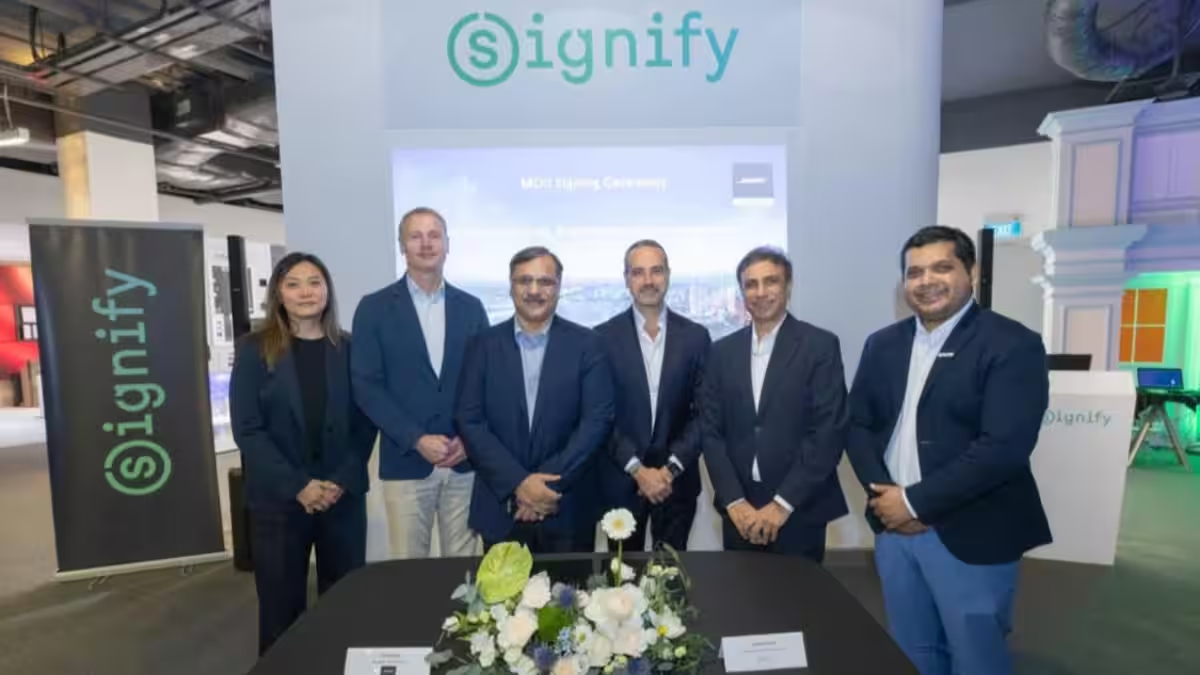
In October 2026, the company also announced an agreement with Bose Professional to explore combined lighting and audio solutions across Southeast Asia. The initial plan covers potential projects in venues such as stadiums, hotels, retail spaces and offices.
The companies intend to identify priority markets, develop demonstration projects and assess opportunities for joint installations.
What Lies Ahead for Signify in India
Signify is working to balance a mature consumer lighting market with opportunities in professional infrastructure and connected technology. Its global business faces cost pressures and uncertainty around construction and investment projects, making profitable growth a central priority.
In India, continued investment in local capabilities and the enduring recognition of the Philips name provide a foundation for that strategy. The next phase will depend increasingly on whether smart lighting, public infrastructure upgrades and connected building systems can generate growth beyond traditional bulb replacement.
For consumers, the immediate message is straightforward: Philips lighting products will remain available under the established name in India, while the business behind them expands further into software-driven and connected lighting solutions.
Related Stories


Reader comments are moderated as per Daily News Axis editorial standards.








