
Houthis Threaten Further Strikes on Saudi Airports and Oil Facilities After Aramco Attack
Yemen’s Houthi movement has threatened to continue attacking Saudi Arabian airports and energy infrastructure following a strike on the headquarters o...
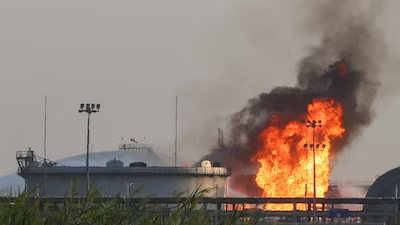
Yemen’s Houthi movement has threatened to continue attacking Saudi Arabian airports and energy infrastructure following a strike on the headquarters of the kingdom’s state-owned oil company in Dhahran. The warning has intensified concerns over regional security, the safety of critical infrastructure and potential disruptions to global energy markets.
The group said its operations were retaliation for Saudi-led military action in Yemen. The latest escalation comes amid widening hostilities across the region, increasing pressure on Saudi authorities to protect key transport hubs and oil facilities.
The attack on the oil company’s administrative complex took place on October 13. Saudi officials confirmed that a fire broke out in a building following the strike, although initial official statements reported no deaths or injuries at the site.
Houthis Identify Airports and Energy Sites as Targets
The Houthi movement announced that it intended to continue operations against locations it considers legitimate military targets. Its statements referred to oil installations in Dhahran, an oil refinery in Riyadh and King Khalid International Airport in the Saudi capital.
The group said it had used missiles and drones in its operations but did not provide a complete timeline for the reported launches.
Saudi Arabia has faced a series of attacks in recent days, including a deadly strike on Riyadh’s international airport. The incident reportedly killed 13 people and injured hundreds, marking a serious deterioration in the kingdom’s security situation.
The repeated threats have prompted heightened concern among authorities, businesses and international travellers. Airports and energy installations are particularly sensitive because damage or temporary closures can affect civilian movement, commercial activity and essential services.
Fire Reported at Oil Company Headquarters
The strike in Dhahran targeted an administrative building within the complex housing the headquarters of Saudi Arabia’s national oil producer. The company plays a central role in the kingdom’s economy and is one of the most important participants in the international petroleum industry.
Saudi authorities reported a fire following the attack, while subsequent accounts suggested that damage inside the building may have been more extensive than initially disclosed. The full scale of the damage and its effect on company operations remained uncertain.
The incident followed warnings from the Houthi movement urging people to leave areas near several Saudi oil and aviation facilities. Those warnings came as the Saudi-led coalition conducted strikes against Houthi-controlled locations in Yemen, including sites near the capital, Sanaa.
The opposing sides have presented their actions as responses to attacks by the other, creating a cycle of retaliation that threatens to widen the conflict.
Rising Security Concerns for Saudi Arabia
The latest developments pose a challenge for Saudi Arabia, which has invested heavily in aviation, tourism, industry and energy infrastructure as part of its economic diversification strategy.
Repeated attacks can disrupt business travel, affect investor confidence and increase the costs associated with protecting critical facilities. The possibility of further strikes has also raised concerns among companies operating in the kingdom and international organisations planning major events there.
Saudi defence forces have reported intercepting missiles and drones during the recent escalation. However, the growing frequency of attacks has highlighted the difficulty of protecting a country with extensive infrastructure and multiple strategically important locations.
Global Oil Markets Face Renewed Uncertainty
Saudi Arabia is a major oil exporter, making threats to its energy infrastructure important for markets worldwide. Even when production continues, uncertainty surrounding facilities, shipping routes and regional security can influence oil prices and trading decisions.
The longer the confrontation continues, the greater the risk of disruption to energy supplies and commercial transport across the region. Market effects will depend on whether attacks damage production or export operations and whether the conflict spreads to additional locations.
The latest threats underline the growing connection between regional military confrontations and global economic stability. With the Houthis promising further attacks and Saudi Arabia continuing its response, the immediate outlook remains uncertain.
Related Stories


Reader comments are moderated as per Daily News Axis editorial standards.








