
Pakistan Signs Three-Year Defence Deal With Türkiye for 100,000 FPV Drones and 500 Loitering Munitions
Pakistan has signed a three-year agreement with Turkish defence and technology company Pasifik Teknoloji to acquire 100,000 first-person-view (FPV) ka...
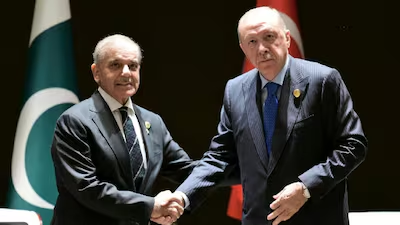
Pakistan has signed a three-year agreement with Turkish defence and technology company Pasifik Teknoloji to acquire 100,000 first-person-view (FPV) kamikaze drones and several other unmanned systems, including 500 tactical loitering munitions. The deal also provides for local assembly and production in Pakistan, potentially expanding the country’s domestic capabilities in unmanned warfare technology.
The agreement was signed on September 18, 2026, between Pasifik Teknoloji and Pakistan’s state-owned National Radio and Telecommunication Corporation (NRTC). Details were subsequently disclosed through a regulatory filing by the Turkish company.
Beyond the large order of small attack drones, the package includes unmanned helicopters, mini-helicopters and autonomous ground support systems. The agreement highlights growing defence cooperation between Pakistan and Türkiye as militaries increasingly incorporate unmanned platforms into their operations.
What Is Included in the Pakistan–Türkiye Drone Deal?
The agreement covers five categories of unmanned equipment, ranging from small expendable drones to larger reusable aircraft and ground-based support systems.
The main components are:
- 100,000 MERKÜT FPV kamikaze drones: Small remotely piloted aircraft designed for precision attacks.
- 500 DELİ tactical kamikaze systems: Loitering munitions designed to remain airborne before striking a target.
- 10 ALPİN unmanned helicopters: Larger rotorcraft designed for missions requiring heavier payloads.
- 25 DUMRUL mini-helicopters: Smaller unmanned rotorcraft intended for tactical operations.
- 250 KORGAN ground systems: Autonomous support and observation units.
The three-year contract covers sales, distribution and local assembly or production. The company has indicated that production and deliveries are expected to begin in the coming period, although a detailed delivery schedule and the financial value of the agreement have not been publicly established in the available disclosures.
The agreement follows an earlier framework arrangement announced in May 2026. Field testing, end-user evaluations, simulation exercises and pilot training were reportedly completed before the parties proceeded with the final contract.
MERKÜT Drones Make Up the Bulk of the Order
The most significant element of the agreement is the procurement of 100,000 MERKÜT FPV drones, which account for the overwhelming majority of the systems covered by the contract.
FPV drones allow operators to view a live video feed from an onboard camera, typically using specialised goggles to guide the aircraft. The MERKÜT is designed as a kamikaze drone, meaning the aircraft itself is expended when it strikes its intended target.
According to publicly reported specifications from its manufacturer, the drone can remain airborne for approximately 20 to 30 minutes and engage targets at distances of up to eight kilometres, depending on the configuration and operating conditions.
Such systems have become increasingly prominent in modern conflicts because relatively small, expendable aircraft can perform missions that would otherwise require more expensive platforms. Their growing use has also encouraged militaries to invest in counter-drone technology and electronic warfare capabilities.
The scale of Pakistan’s order suggests an emphasis on acquiring large numbers of relatively small unmanned aircraft rather than relying exclusively on larger, reusable drones.
500 DELİ Loitering Munitions and Unmanned Helicopters
The agreement also includes 500 DELİ tactical kamikaze systems. Unlike conventional surveillance drones, loitering munitions are designed to remain airborne while searching for or awaiting a suitable target before conducting an attack.
The contract does not specify which DELİ variants Pakistan will receive, leaving the precise configuration of the order unclear.
The ALPİN and DUMRUL platforms add different capabilities to the package. ALPİN is a larger unmanned helicopter intended for missions that require greater payload capacity, while DUMRUL is a smaller rotorcraft designed for tactical applications.
The 250 KORGAN ground systems are another component of the arrangement. These units are intended to provide ground-based support and observation capabilities for unmanned operations.
Taken together, the different platforms give Pakistan a broader range of unmanned systems, although their eventual operational contribution will depend on delivery, training, maintenance and integration with existing military infrastructure.
Local Production Could Strengthen Pakistan’s Defence Industry
A key feature of the agreement is the provision for local assembly and production in Pakistan through NRTC.
Domestic manufacturing could help Pakistan develop technical expertise, improve access to replacement equipment and reduce some dependence on imported finished systems. However, the extent of technology transfer, the proportion of components to be manufactured locally and the final production arrangements have not been fully disclosed.
For Türkiye, the agreement represents an opportunity to expand its unmanned systems exports and deepen its defence-industrial relationship with Pakistan. Pasifik Teknoloji has described the contract as its first defence export.
Regional Security Implications
The deal comes amid growing international investment in unmanned warfare systems, particularly following conflicts in which small drones and loitering munitions have played increasingly prominent roles.
For Pakistan, the acquisition could expand its inventory of unmanned platforms and create opportunities to develop domestic production capabilities. For regional observers, the scale of the purchase will draw attention to how South Asian militaries are adapting to changes in battlefield technology.
However, the agreement alone does not establish how quickly the systems will enter service or what effect they will have on the regional military balance. Delivery schedules, operational readiness and the success of local production will be important factors in assessing its longer-term significance.
The coming years should provide a clearer picture of whether the Pakistan–Türkiye partnership develops into a sustained manufacturing arrangement or remains primarily a procurement programme supported by selected local assembly activities.
Related Stories


Reader comments are moderated as per Daily News Axis editorial standards.