Dharmendra Yadav Questions Election Commission, Says SP Won Ayodhya Despite Alleged Electoral Irregularities
Samajwadi Party (SP) MP Dharmendra Yadav has intensified his criticism of the Election Commission of India (ECI), alleging that voter-list revisions h...
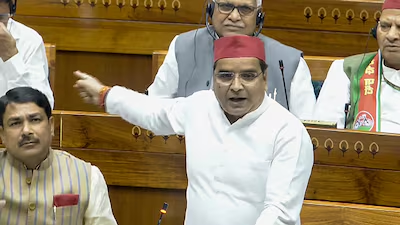
Samajwadi Party (SP) MP Dharmendra Yadav has intensified his criticism of the Election Commission of India (ECI), alleging that voter-list revisions have deprived millions of people of their electoral rights. Defending his party’s victory in Ayodhya during the 2024 Lok Sabha elections, Yadav argued that the result demonstrated the SP’s ability to win despite what he described as an unfair electoral environment.
In an interview on October 16, Yadav raised concerns over the Special Intensive Revision (SIR) of electoral rolls and claimed that approximately 13 crore voters had been removed from voter lists across India, including nearly three crore in Uttar Pradesh. These figures represent his allegations and have not been independently established here.
Dharmendra Yadav Defends SP’s Ayodhya Victory
Responding to questions about how the SP could consider its electoral victories legitimate while questioning the election process, Yadav pointed to the party’s performance in Uttar Pradesh in 2024, particularly its win in the politically significant Faizabad constituency, which includes Ayodhya.
The SP leader maintained that his party’s success came despite what he believes was a failure by election authorities to act impartially. He also referred to objections raised by his party over previous elections, saying that concerns about alleged irregularities had not received an adequate response.
Yadav further alleged that the Election Commission was no longer functioning as a neutral referee. His remarks form part of the opposition’s wider criticism of the commission’s independence and the conduct of voter-list revision exercises.
Voter List Revision Becomes a Political Flashpoint
The SIR process has become a major point of disagreement between opposition parties and the election authorities. Critics have expressed concern that eligible voters could lose their place on electoral rolls, while the exercise has generated broader debate about verification, documentation and access to voting rights.
Yadav argued that the scale of the alleged deletions required greater public scrutiny. His comments also reflected concerns within the SP about the potential political consequences of changes to voter lists in Uttar Pradesh, a state that plays a decisive role in national elections.
The claims surrounding voter deletions remain politically contested. Questions about individual exclusions, the reasons for removal and the procedures available to affected voters require examination through official records and established review mechanisms.
SP Leader Urges Opposition Parties to Prioritise BJP
Yadav also addressed tensions among opposition parties in Uttar Pradesh, particularly criticism directed at the SP by Congress leader Imran Masood. He urged leaders from parties that cooperate with the SP to concentrate on challenging the Bharatiya Janata Party (BJP) rather than engaging in public disputes with their potential allies.
His remarks come amid continuing efforts by opposition parties to maintain cooperation ahead of future electoral contests. Differences over strategy, leadership and constituency-level interests can complicate coordination even when parties share a common opponent.
Yadav rejected suggestions that the opposition alliance in Uttar Pradesh was heading towards a breakdown. He expressed confidence that SP president Akhilesh Yadav and Congress leader Rahul Gandhi would work towards resolving differences and finalising seat-sharing arrangements.
Unemployment and Prices Also in Focus
Turning to the state government’s performance, Yadav identified unemployment, rising prices and farmers’ concerns as issues requiring greater attention. He questioned claims that Uttar Pradesh had achieved substantial improvements in law and order, arguing that public concerns about livelihoods and living costs remained unresolved.
He also criticised the use of bulldozer demolitions as a form of punishment, insisting that legal procedures should be followed. These comments add to the broader political dispute over governance, policing and accountability in the state.
The SP’s challenge will be to turn criticism of electoral processes and governance into sustained public support. Meanwhile, debate over voter-list revisions and opposition coordination is likely to remain central to political discussions in Uttar Pradesh.
Related Stories


Reader comments are moderated as per Daily News Axis editorial standards.