
Replacing a Decade-Old Gas Stove: Why Indian Kitchens Are Considering Induction and Modern Electric Cooking
A gas stove that has served a household for a decade may still work reliably, but its age can be a good reason to check its condition, efficiency and ...
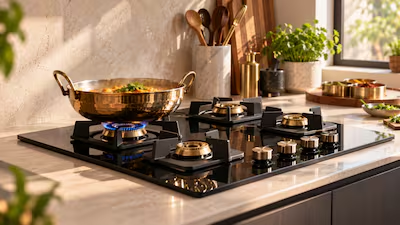
A gas stove that has served a household for a decade may still work reliably, but its age can be a good reason to check its condition, efficiency and safety features. Modern cooking appliances offer alternatives that can reduce indoor combustion pollution, simplify cleaning and provide more precise temperature control.
For Indian households accustomed to cooking with liquefied petroleum gas (LPG), replacing a familiar gas stove is not necessarily an urgent requirement. The decision depends on the appliance’s condition, household cooking habits, electricity supply and the cost of switching to a different technology.
When Should You Replace an Old Gas Stove?
Age alone does not determine whether a gas stove needs replacement. The condition of its burners, valves, ignition system, gas hose and other components matters more.
Uneven flames, repeated ignition problems, damaged controls or signs of corrosion may indicate that the appliance needs professional inspection. A persistent gas smell should never be ignored; turn off the gas supply if safe to do so, avoid operating electrical switches or creating flames, and seek appropriate emergency assistance.
Regular maintenance can help keep a stove operating safely. Older appliances should be inspected by a qualified technician, particularly if they have not been serviced for several years.
However, a stove that is functioning properly and has been maintained appropriately does not automatically need to be discarded simply because it has reached its tenth year.
Induction Cooktops Offer a Modern Alternative
Induction cooktops have become a popular alternative to conventional gas stoves. They use electromagnetic energy to heat compatible cookware directly rather than burning fuel to produce a flame.
This approach offers several advantages. Induction cooking is generally more energy-efficient than gas cooking, heats cookware quickly and allows precise temperature adjustments. Because there is no open flame or combustion at the cooktop, it also avoids the nitrogen dioxide and carbon monoxide emissions associated with burning gas indoors.
The flat surface is relatively easy to clean, and many models include automatic shut-off and overheating protection.
There are practical limitations, however. Induction cooktops require electricity and compatible cookware, usually with a magnetic base. Some traditional aluminium, copper or glass vessels may not work unless they have a suitable induction-compatible base.
Electric and Infrared Cooktops Provide Other Choices
Conventional electric and infrared cooktops are additional options for households considering an upgrade.
Infrared models heat a cooking surface that transfers heat to the vessel. Unlike induction appliances, they generally work with a wider range of cookware. Their surfaces can remain hot after cooking, however, so users must take care to avoid burns.
Traditional electric hotplates are another option, although they generally heat more slowly and lose more energy than induction cooktops.
The right choice depends on how a household cooks. Induction is suited to everyday tasks such as boiling, simmering and frying, while infrared models may be useful for people who want to continue using existing utensils.
What About Health and Indoor Air Quality?
One important difference between gas and electric cooking is indoor air pollution.
Burning gas can release nitrogen dioxide and other pollutants. Poor ventilation may allow these emissions to accumulate, particularly during extended cooking sessions.
Electric cooking appliances do not produce combustion emissions at the point of use. Switching to induction or another electric cooktop can therefore reduce one source of indoor pollution.
Nevertheless, cooking itself can generate particles and smoke, especially when frying at high temperatures or when oil burns. Appropriate kitchen ventilation remains important regardless of the appliance being used.
Consider Electricity Supply and Running Costs
The upfront cost of a new appliance is only one part of the decision. Households should also consider electricity tariffs, LPG refill costs, expected usage and whether their existing cookware can be reused.
Induction cooktops can reduce cooking time and energy waste, but actual savings depend on local fuel prices, electricity rates and cooking habits. They also cannot operate during a power cut unless an appropriate backup power source is available.
For households that frequently experience outages, retaining a properly maintained gas stove may offer useful flexibility.
Making the Right Decision for Your Kitchen
Replacing a decade-old gas stove is best treated as a safety and efficiency assessment rather than a deadline based on age.
A well-maintained gas stove may continue to serve a household, while an induction cooktop can offer faster cooking, easier cleaning and reduced combustion pollution. Electric and infrared alternatives may also suit particular needs.
Before making a purchase, assess the existing stove’s condition, the household’s cooking requirements, electricity reliability and total operating costs. Choosing an appliance that fits these practical considerations is more useful than replacing a functioning stove solely because newer technology is available.
Related Stories


Reader comments are moderated as per Daily News Axis editorial standards.