Sonia Gandhi Reveals Why She Wrote Her Memoir, Says ‘Unreal’ Stories About Family Needed to Be Addressed
Congress Parliamentary Party chairperson Sonia Gandhi has explained that she decided to write her memoir, Belonging: A Journey of Love , partly to cha...
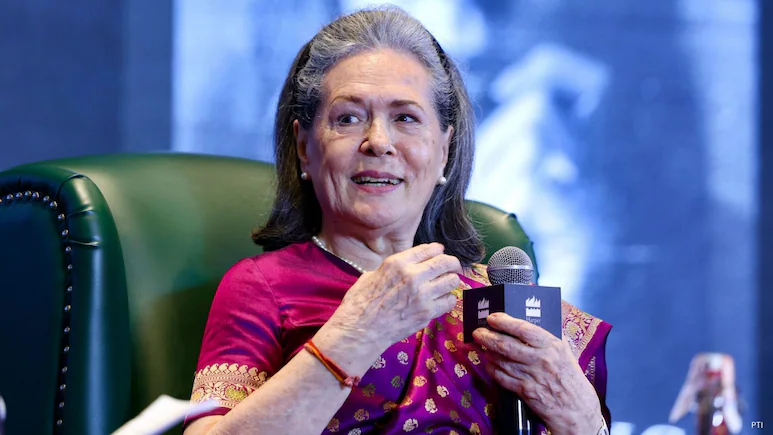
Congress Parliamentary Party chairperson Sonia Gandhi has explained that she decided to write her memoir, Belonging: A Journey of Love, partly to challenge what she described as inaccurate and hurtful stories about her family. Speaking at the book’s formal launch in New Delhi on November 16, she said she wanted readers to hear her perspective on her life, her relationships and the experiences that shaped the Gandhi family.
The memoir offers a personal account of Sonia Gandhi’s journey from Italy to India, her marriage to former Prime Minister Rajiv Gandhi, her relationship with her mother-in-law Indira Gandhi and the challenges she faced while becoming part of one of India’s most prominent political families.
Explaining her motivation, Sonia said numerous accounts had been written about her, her husband, her children and her mother-in-law that did not reflect the people she knew. She hoped the book would allow readers to understand her feelings and experiences rather than rely entirely on stories circulated about the family.
Sonia Gandhi Says She Wanted to Set the Record Straight
At the launch event, Sonia Gandhi said that repeated accounts about her family had often been far removed from reality. She described how untrue stories and hurtful remarks had influenced public perceptions of people close to her.
She explained that writing the memoir gave her an opportunity to share her own understanding of those relationships and events.
Rather than presenting the book solely as a political account, Sonia has approached it as a personal narrative in which public life provides the backdrop to experiences involving love, family, loss and belonging.
The memoir also reflects her desire to explain aspects of her life that she believes have frequently been misunderstood. Her account places particular emphasis on the emotional experiences behind a family whose private affairs have remained a subject of public interest for decades.
Why the Book Is Called ‘Belonging’
Sonia Gandhi said the word belonging captures a central theme of her life after moving from Italy to India following her relationship with Rajiv Gandhi.
She recalled that being an outsider could create a feeling of constantly being observed and judged, with the sense that one might not always understand the expectations of the surrounding society.
For Sonia, finding acceptance involved learning a different culture, adjusting to a new family and gradually developing a deeper connection with India.
She also drew parallels with the experiences of Indian women who move into their husbands’ homes after marriage. Even when women share a similar cultural background with their new families, she noted, adapting to unfamiliar customs and expectations can be difficult.
Her experience, she suggested, was different in some respects because she came from another country and social environment, but the underlying challenge of finding acceptance was not unique to her.
Memories of Rajiv Gandhi and Indira Gandhi
The memoir revisits Sonia Gandhi’s relationship with Rajiv Gandhi, whom she described as the love of her life. The two first met in Cambridge through a mutual friend.
She recalled that her father had been strict about the relationship and had even provided her with a return ticket in case the marriage did not work out. Sonia later reflected on how she never returned home under those circumstances.
She also discussed her relationship with Indira Gandhi, admitting that she initially found the former prime minister intimidating. Over time, however, their relationship developed into a close bond.
Some of the most difficult portions of the memoir involved the deaths of Indira Gandhi in 1984 and Rajiv Gandhi in 1991. Sonia said revisiting those experiences brought back painful memories.
She recalled being devastated by the losses and credited her children, Rahul Gandhi and Priyanka Gandhi Vadra, with helping her through the most difficult period of her life. She described how their roles within the family changed as they supported her through grief.
Writing the Memoir Was Not Easy
Sonia Gandhi acknowledged that putting her memories into writing presented challenges, particularly when she had to revisit painful events.
She also revealed that she had never maintained a diary, something she now considers a mistake. The absence of detailed personal records made recalling certain periods of her life more difficult.
Her children and friends encouraged her to continue writing when she struggled with some sections, especially those dealing with family tragedies.
The book consequently combines recollections of her early life and marriage with reflections on the experiences that shaped her public and private identity.
Strong Response Following the Book’s Release
The launch brought together Rahul Gandhi, Priyanka Gandhi Vadra, Congress president Mallikarjun Kharge and several leaders from opposition parties. Former Punjab Chief Minister Amarinder Singh, now associated with the BJP, was also among those attending.
Sonia said she was overwhelmed by the response to the book, while acknowledging that some reviews had been unpleasant and others more genuine.
Ultimately, the memoir offers Sonia Gandhi an opportunity to present her own account of a life shaped by cultural adjustment, family relationships, political upheaval and personal loss. By explaining why she chose to write it, she has made clear that the book is intended not only to preserve memories but also to give readers a different perspective on the family behind the public headlines.
Related Stories
Reader comments are moderated as per Daily News Axis editorial standards.