Delhi High Court Grants Bail to Mohd Shahzad Kamal After Five Years in Custody
The Delhi High Court has granted bail to Mohd Shahzad Kamal, who has been in custody for more than five years in a case involving allegations of links...
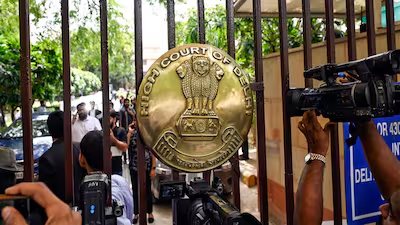
The Delhi High Court has granted bail to Mohd Shahzad Kamal, who has been in custody for more than five years in a case involving allegations of links with an ISIS-affiliated group. The decision comes amid concerns over the pace of the trial, which involves a large number of prosecution witnesses.
A division bench comprising Justices Navin Chawla and Arun Bhardwaj allowed Kamal’s appeal against a special court order that had rejected his bail application in May 2024. The detailed High Court order is awaited.
Kamal was arrested on August 31, 2021, in a case investigated by the National Investigation Agency (NIA). The allegations relate to a purported conspiracy involving the group Harkat-ul-Harb-e-Islam, which the agency describes as affiliated with ISIS.
Prolonged Custody and Trial Progress
One of the significant factors reported in connection with the bail decision was the time Kamal had already spent in custody and the slow progress of the trial.
The prosecution has cited 161 witnesses in the case. Reports indicate that only one prosecution witness was being examined at the relevant stage, raising questions about how long the proceedings could take to conclude.
Kamal’s legal team argued that the material collected by the investigating agency did not provide sufficient evidence that could be relied upon to establish the allegations during trial. His lawyers also questioned the connection between him and certain digital conversations cited by the prosecution.
The High Court’s decision to grant bail does not amount to a finding that the allegations are false or that the accused has been acquitted.
What the NIA Has Alleged
According to the NIA, Kamal allegedly helped arrange and transfer funds from Saudi Arabia to support the activities of the group. The agency has claimed that he provided money to a co-accused on multiple occasions between 2017 and 2019.
The investigation also reportedly relied on conversations recovered from Facebook and WhatsApp. The agency alleged that these exchanges concerned the transfer of funds and support for the group’s activities.
Kamal has faced charges under provisions of the Unlawful Activities (Prevention) Act, along with other relevant legal provisions. These allegations remain subject to examination during the ongoing judicial process.
Prosecution Opposed the Bail Plea
The NIA opposed the request for bail, arguing that Kamal had an active role in the alleged conspiracy. The agency also maintained that delays in the trial alone should not automatically justify bail in cases involving serious offences under the UAPA.
The defence, meanwhile, highlighted the period of detention and the limited progress in recording witness testimony.
The High Court’s decision reflects the legal consideration of prolonged pre-trial detention alongside the status of proceedings. The detailed reasoning will become clearer once the written order is made available.
Bail Does Not Decide the Case on Merits
The grant of bail allows Kamal to be released subject to the conditions imposed by the court. It does not end the criminal proceedings or determine his guilt or innocence.
The trial will continue, and the prosecution will have to establish its allegations through evidence in court. The case also brings attention to the balance courts must consider between the seriousness of accusations, statutory restrictions on bail and the right to a timely trial.
Related Stories


Reader comments are moderated as per Daily News Axis editorial standards.