
Government Jobs at 40: Why States Are Increasing Upper Age Limits for Recruitment
New Delhi, September 27, 2026: Government jobs in India have traditionally been associated with relatively strict age limits, but several states are n...
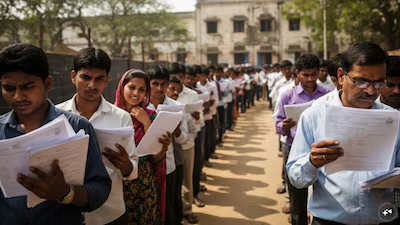
New Delhi, September 27, 2026: Government jobs in India have traditionally been associated with relatively strict age limits, but several states are now revisiting those rules and giving older candidates additional opportunities to compete for public-sector positions. Recent changes in states including Andhra Pradesh, Karnataka, Kerala and West Bengal have brought the question of upper age limits for government recruitment back into focus.
The changes come as governments face concerns over delayed recruitment cycles, vacant posts and candidates losing eligibility while waiting for examinations and appointments. However, a higher age ceiling does not automatically mean more vacancies, making recruitment frequency and the actual number of posts available equally important factors.
Andhra Pradesh Raises Age Limit to 44
Andhra Pradesh is among the latest states to revise its recruitment rules. The state government has increased the upper age limit for direct recruitment to non-uniform government services from 42 to 44 years and extended the relaxation until September 30, 2027.
The decision applies to upcoming recruitments through the Andhra Pradesh Public Service Commission and other recruiting agencies. The move comes shortly before applications are scheduled to open for a major recruitment exercise involving 892 posts, including Group-I positions.
The government order followed representations from job aspirants seeking relief because of prolonged gaps between recruitment cycles.
Karnataka Gives Aspirants Additional Time
Karnataka has also introduced a significant age relaxation for government recruitment. The state has announced a one-time five-year relaxation covering notifications issued up to December 31, 2027.
Under the revised arrangement, the upper age limit for general-category candidates increases from 35 to 40 years. For several backward-class categories, it rises to 43 years, while eligible Scheduled Caste and Scheduled Tribe candidates can receive an upper limit of 45 years.
The move is expected to benefit a substantial number of aspirants, particularly those affected by delays in recruitment. However, questions remain about how many candidates will ultimately benefit because eligibility also depends on the specific recruitment notification and post.
West Bengal Moves Upper Limits Higher
West Bengal has adopted another broad change in its state recruitment framework. The upper age limit has been set at 41 years for Group A, 44 years for Group B, and 45 years for Group C and Group D posts.
The revised limits also cover certain recruitments outside the Public Service Commission, including state undertakings, government companies and local self-governing bodies, subject to applicable rules. The changes took effect in May 2026.
Kerala and Other States Have Also Revised Rules
Kerala has similarly increased age limits for some categories of state recruitment. Current recruitment notifications demonstrate that age eligibility can vary significantly according to the post and category. For example, a 2026 Kerala PSC recruitment notification for an Assistant Manager position specifies an age range of 18 to 40 years, with applicable relaxations and an overall ceiling in certain circumstances.
These variations underline an important point for aspirants: there is no single upper-age rule applicable to every government job in India. Eligibility depends on the recruiting authority, post, category and notification.
Why Are States Raising Age Limits?
One major factor is the gap between recruitment cycles. When examinations or appointments are delayed for extended periods, candidates who were eligible when the recruitment process was expected to begin can cross the prescribed age limit before vacancies are actually advertised.
Age relaxation can therefore provide such candidates another opportunity to compete.
The issue is particularly relevant in states where large numbers of vacancies remain unfilled or recruitment calendars have experienced delays. Recent discussions around state recruitment have also highlighted the difference between having a higher age limit and having sufficient vacancies to accommodate applicants.
Higher Age Limit Does Not Guarantee a Government Job
For candidates, the revised rules create additional eligibility but do not guarantee selection. Applicants must still satisfy educational qualifications, category requirements, examination criteria and other conditions specified in individual recruitment notifications.
The number of available posts also matters. Tamil Nadu, for instance, recently reported only 26 Group-I vacancies in a recruitment cycle, illustrating how the number of opportunities can vary substantially from one year to another.
As more states reconsider recruitment age limits, the larger issue is therefore not simply whether candidates can apply until 40, 44 or 45. The effectiveness of these changes will also depend on regular recruitment, timely examinations, adequate vacancies and faster completion of selection processes.
Related Stories


Reader comments are moderated as per Daily News Axis editorial standards.