
Your First-Aid Kit Has Bandages. But What About Your Mind?
We prepare for cuts, bruises and the occasional mishap. We know where the first-aid box is kept. But when life gets emotionally messy, where do we rea...

We prepare for cuts, bruises and the occasional mishap. We know where the first-aid box is kept. But when life gets emotionally messy, where do we reach? Indian writer Rucha Solgama has an interesting answer: perhaps we need a first-aid kit for our minds, too.
Imagine having a particularly tough day. Your thoughts are all over the place, you’re feeling anxious, a little lonely, perhaps carrying guilt you cannot quite put into words. You want someone to talk to, but your favourite person isn’t available. You don’t know what to do, or where to begin.
Now imagine having something within reach that helps you pause, understand and navigate some of those feelings.
Not a promise that everything will suddenly be fine. Just a little understanding — when you need it most.
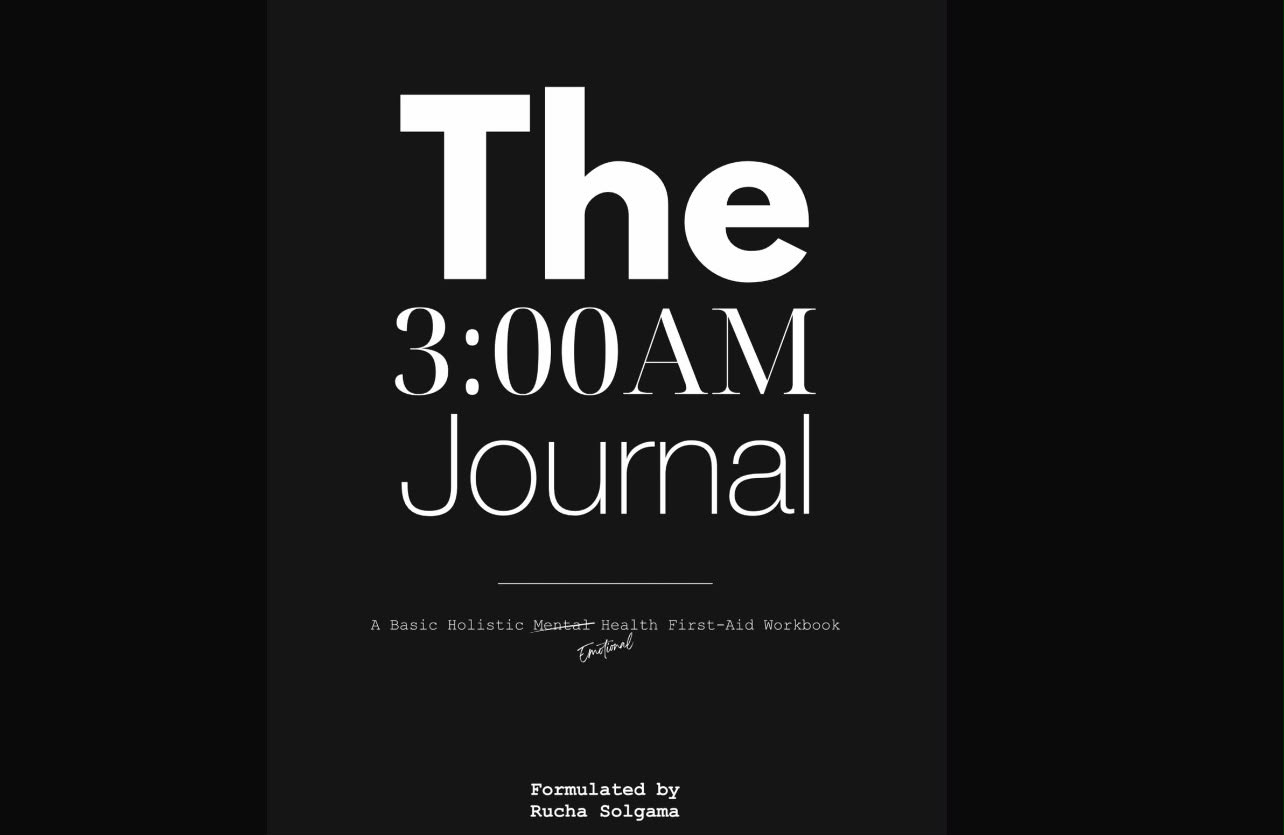
That’s the idea behind The 3:00 AM Journal – A Basic Holistic Mental Health First-Aid Workbook, formulated by Indian writer and first-time author Rucha Solgama.
So, what’s with the 3:00 AM?
It’s not about the clock. It’s about those darkest emotional nights in life.
The moments when everything feels a little too much, when emotions become heavy to navigate and you find yourself wishing someone could simply guide you through what you’re experiencing.
The book is imagined as that friend — something you can turn to when immediate support isn’t available, until your favourite person or a professional can be there.
And its central idea is wonderfully straightforward: we keep a first-aid kit at home whether we need it or not. Why shouldn’t we have something similar for our mental and emotional health?
Overtaxed emotions. Lighter conversations.
Let’s face it: words like depression, anxiety, loneliness and emotional distress can feel intimidating. Sometimes, understanding what these experiences mean is complex enough. Explaining them in a way that doesn’t make someone feel even more overwhelmed is another challenge altogether.
That was one of the biggest considerations behind Solgama’s approach.
She wanted to take these heavy subjects and transmute them into simple, light-hearted understandings that even a child could grasp. It took years of thought to find a way to make the language approachable without making the subject any less important.
The workbook brings together simple explanations, self-discovery questions, reflections and interactive exercisescovering depression, anxiety, stress, loneliness, insomnia, guilt, regret and relationship issues.
It also takes readers beyond intertwined emotions, exploring forgiveness, healthy relationships, personal strengths/ weaknesses and the idea of one’s ideal self.
Because understanding yourself shouldn’t begin and end with figuring out what’s wrong. There’s plenty worth discovering about what makes you happy, too.
A little note from your happiest self.
Here’s a lovely thought tucked into the concept of the book: what if your happier self could leave something behind for the version of you who might need it later?
Think favourite songs, movies, books, foods, travel destinations, activities and all those little things that make you feel good.
Not each day is the same. The suggestion is to document them when you’re in a happy, comfortable state of mind. That way, when a difficult phase arrives, you already have a collection of reminders and comforts to revisit; as your personal toolkit to safeguard yourself from the challenging days. It serves as an armour, creating a barrier against negativities. It’s intended to protect yourself, until — that weather of unpleasant phase withers away.
Not a cure. A companion until help arrives.
Solgama is clear about what the workbook is and what it isn’t. It isn’t designed to treat deep trauma, phobias or biological conditions, nor does it replace professional mental health support.
She describes it as a buffer — a temporary source of guidance and reflection until the appropriate help is on the way.
The book is designed for a broad readership, from pre-teens to people in their nineties. Its approach rests on the belief that emotional awareness isn’t something we should wait until adulthood to explore, or something we should learn only when life becomes tiresome.
You don’t have to be struggling to benefit from understanding yourself better. And, knowing a little more could also help you recognise when someone you love needs support.
The woman behind the journal.
Rucha Solgama is an Indian writer who has contributed to magazines and newspapers across diverse genres since the age of 21. With a particular interest in factual and non-fiction writing, she has spent years collecting ideas, observations and notes for books she hopes to bring to life.
Her first publication brings one such idea into the world, shaped by a desire to make wisdoms easier to understand and accessible across generations.
With The 3:00 AM Journal, she takes on a subject that is often discussed in heavy terms and attempts something different: making the first steps towards emotional understanding feel less intimidating.
Life doesn’t always give us a heads-up before things get difficult. There may be moments when the people we turn to aren’t immediately around, or when we struggle to find the right words or simply don’t know what our next step should be. That’s where The 3:00 AM Journal hopes to find its place — not as a cure, not as a replacement for human connection or professional help, but as a little something to hold on to until help arrives.
Perhaps one day, you’ll open these pages looking for an answer. Perhaps another day, you’ll open them simply to remind yourself of everything that makes you happy. Either way, the intention remains the same: to make sure that when life brings you one of its darkest emotional nights, you aren’t entirely unfamiliar with the way forward.
Because one day, it may be 3:00 AM — nobody may be around, and your mind may need a friend. This book was made to be that friend.
Book Link: The 3:00 AM Journal – A Basic Holistic Mental Health First-Aid Workbook
Article Media Gallery
Related Stories


Reader comments are moderated as per Daily News Axis editorial standards.