UPSC Aspirant Shares Interview Experience: Questions on Modelling, Economics, Women’s Safety and ‘Kerala vs Kaza’
A UPSC Civil Services Examination aspirant has shared her interview experience, offering insights into the range of questions candidates may face duri...
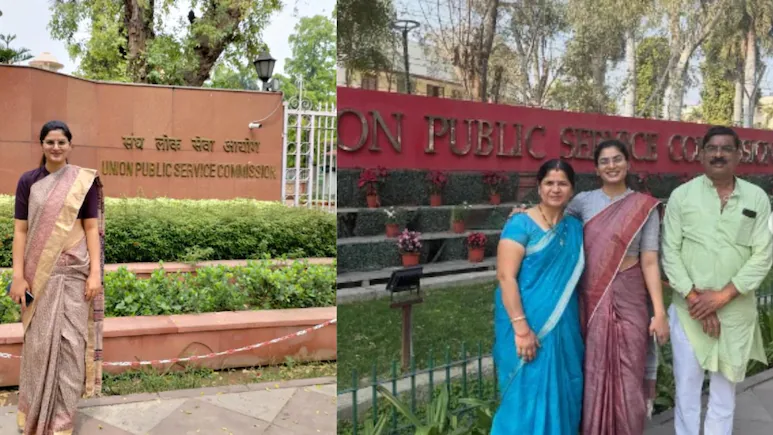
A UPSC Civil Services Examination aspirant has shared her interview experience, offering insights into the range of questions candidates may face during the personality test. The questions reportedly covered modelling, economics, taxation, women’s safety, reading habits, hobbies and travel destinations.
Ritika Tiwwari, who identifies herself by that name on Instagram, discussed her experience of the UPSC Civil Services Examination 2025 interview. According to her account, she scored 946 marks in the examination and has appeared for the interview twice. Her experience highlights how the interview panel can move between a candidate’s personal background, academic knowledge and current affairs.
Interview Began With Questions About Modelling
According to Tiwwari, the interview began with questions about her modelling career. The chairperson asked about her experience in the industry and the challenges associated with modelling.
The discussion reportedly explored issues connected to the profession rather than remaining limited to her personal experience. Such questions can allow interviewers to assess how candidates understand their professional interests and the wider social context surrounding them.
The panel also raised questions related to economics, reflecting her academic background.
Economics, Taxation and the Porsche Hit-and-Run Case
Economics featured repeatedly during the interview, the aspirant recalled. The panel reportedly asked conceptual questions, including topics similar to those encountered in the UPSC preliminary examination.
Another part of the discussion concerned a widely reported hit-and-run case involving a teenager driving a Porsche. The incident had been in the news shortly before her interview.
A board member asked whether stricter policies were necessary in response to such incidents. The question required the candidate to consider public safety, accountability and the role of law.
The discussion subsequently moved towards taxation and other economics-related concepts.
Tiwwari also described encountering a question she could not answer. She said she acknowledged that she did not know the answer and explained her academic journey, from graduation in economics to a master’s degree in sociology and subsequently qualifying for the Junior Research Fellowship (JRF).
Her account illustrates the importance of responding honestly when faced with an unfamiliar question rather than attempting to bluff.
Questions on Women’s Safety and Local Challenges
The panel also reportedly asked Tiwwari about the major problems faced by women in her district.
A follow-up question sought suggestions for improving women’s safety. These questions required her to consider local social conditions and possible administrative responses.
For civil services aspirants, such questions can involve several dimensions, including public infrastructure, law enforcement, access to education, economic opportunities and awareness of legal protections.
Candidates may need to explain both the challenges and practical measures that public authorities could take to address them.
Books, Hobbies and Modelling-Related General Knowledge
The interview also covered Tiwwari’s reading preferences, including a self-help book from the 20th century, as well as questions about her hobbies.
The panel reportedly asked her about modelling-related facts, including the first Indian woman to win the Miss World title.
Reena Roy is sometimes confused with the titleholder, but Reita Faria became the first Indian woman to win Miss World in 1966.
Questions about hobbies and personal interests can help interviewers understand whether candidates have genuine engagement with the activities they mention in their application forms.
‘Kerala vs Kaza’: A Question About Travel
One of the memorable parts of the interview involved two places Tiwwari identified as favourites: Kerala and Kaza.
When she mentioned the destinations, a board member asked her to explain the major differences between them.
Kerala is a coastal state in southwestern India known for its tropical climate, backwaters and biodiversity. Kaza, by contrast, is a town in the high-altitude Spiti Valley of Himachal Pradesh, known for its cold desert landscape, mountainous terrain and Buddhist cultural heritage.
The contrast between the two destinations creates an opportunity to discuss geography, climate, culture, tourism and the challenges of living in different environments.
The exchange also demonstrates how a seemingly simple question about travel can lead to a broader discussion of India’s regional diversity.
UPSC CSE 2026 Interview Schedule
The Union Public Service Commission is scheduled to begin the Civil Services Examination 2026 personality tests on December 7, 2026. According to the published schedule, 2,526 candidates are expected to participate in the interview round, which is scheduled to continue through December 12.
The personality test evaluates qualities beyond factual knowledge, including judgement, clarity of thought, awareness, communication and suitability for public service.
What Aspirants Can Learn From the Experience
Tiwwari’s account offers several practical lessons for candidates preparing for the UPSC interview:
- Prepare your Detailed Application Form thoroughly: Be ready to discuss your education, professional experience, hobbies and personal interests.
- Revise your academic subjects: Questions may return to your graduation discipline even if you later pursue a different field.
- Follow current affairs: Recent incidents can prompt questions about laws, public policy and governance.
- Know your home district: Be prepared to discuss local challenges and realistic solutions, particularly those involving social welfare and administration.
- Answer honestly: If you do not know something, acknowledge it calmly instead of guessing without a sound basis.
- Develop balanced opinions: Interviewers may expect reasoned arguments rather than memorised answers, especially on sensitive public issues.
Ultimately, the UPSC personality test is not simply a test of memory. It provides an opportunity for candidates to demonstrate how they think, communicate and approach unfamiliar or complex situations.
Related Stories

Reader comments are moderated as per Daily News Axis editorial standards.