Basmati Rice in the Global Market: New Opportunities and a Promising Future for Indian Farmers
India’s Basmati Advantage in Global Markets Agriculture has always been at the heart of India's economy, supporting millions of farming families and c...
India’s Basmati Advantage in Global Markets
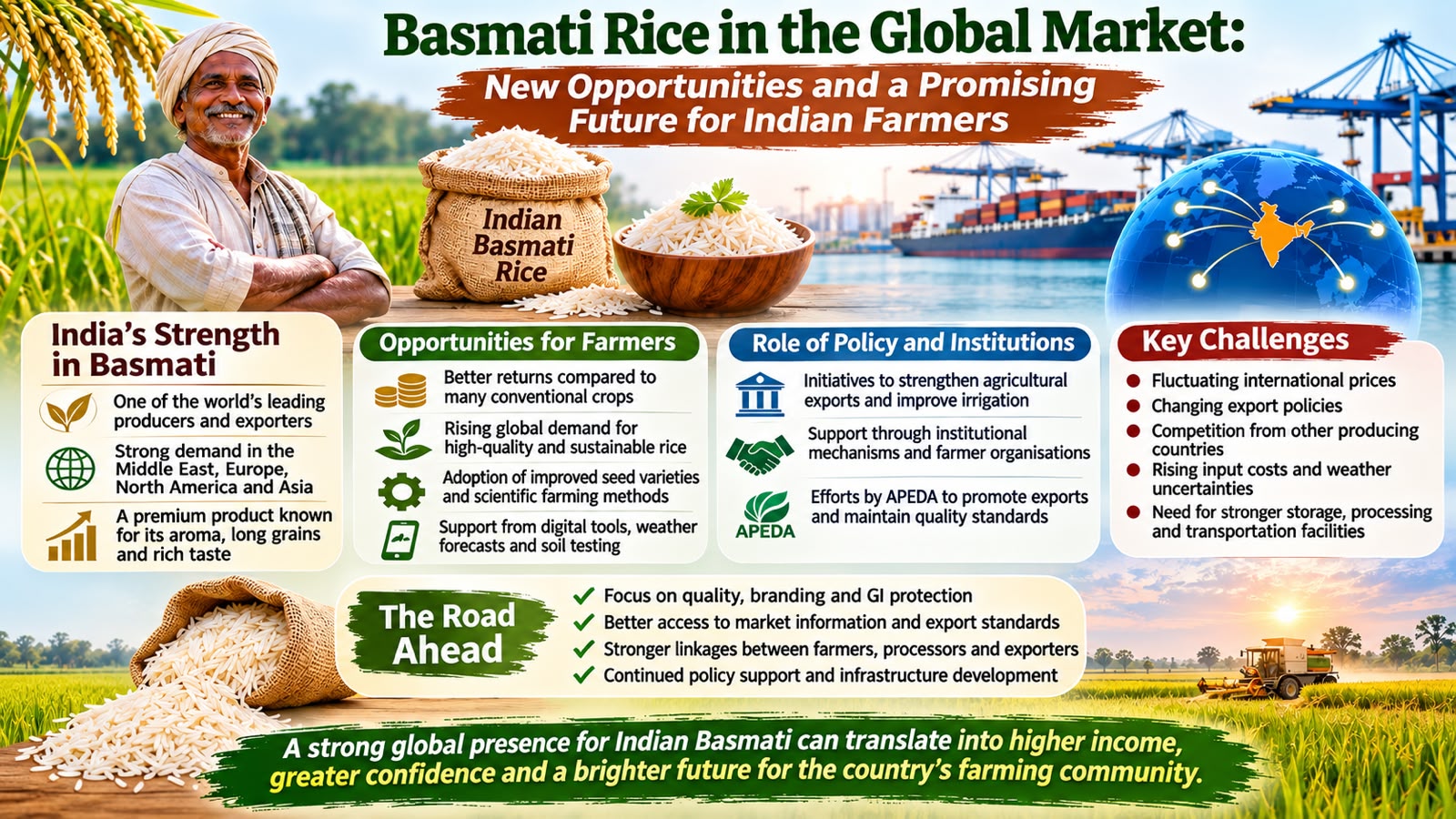
Agriculture has always been at the heart of India's economy, supporting millions of farming families and contributing significantly to the country's food security. Among India's many agricultural products, Basmati rice holds a special place. Known across the world for its distinctive aroma, long grains and rich taste, Indian Basmati has established itself as a premium agricultural product in international markets. Today, as global demand for quality food products continues to grow, Basmati rice is opening new doors of opportunity for Indian farmers.
India is one of the world's leading producers and exporters of Basmati rice. Its popularity extends across several international markets, particularly in the Middle East, Europe, North America and other parts of Asia. Countries such as Saudi Arabia, Iran, Iraq and the United Arab Emirates have traditionally been important destinations for Indian Basmati. The growing preference for authentic and high-quality food products has further strengthened its position in the global rice trade.
Why Basmati Matters to Indian Farmers
However, the importance of Basmati goes beyond exports and foreign exchange earnings. It has a direct connection with the livelihoods of farmers, especially those cultivating it in states such as Punjab, Haryana, Uttar Pradesh, Uttarakhand, Himachal Pradesh and Jammu and Kashmir. For many farming families, Basmati cultivation provides an opportunity to earn better returns compared to several conventional crops, although actual income depends on market prices, production costs and crop conditions.
The changing global food market is creating fresh possibilities for this traditional Indian crop. Consumers are becoming increasingly conscious of food quality, traceability, sustainability and the methods used in agricultural production. This shift offers Indian farmers an opportunity to move towards better farming practices, improved seed varieties and more scientific methods of cultivation.
Modernisation, Export Support and Better Farming Practices
In recent years, the focus on agricultural modernisation, infrastructure development, digital technology and improved market access has become increasingly important. Government initiatives aimed at strengthening agricultural exports, improving irrigation facilities and supporting farmers through institutional mechanisms can play a meaningful role in helping Indian agricultural products compete internationally. Organisations such as the Agricultural and Processed Food Products Export Development Authority (APEDA) also contribute to promoting Indian agricultural exports and maintaining quality standards.
For Basmati farmers, however, the real opportunity lies in improving productivity without compromising quality. Proper seed selection, balanced use of fertilisers, efficient water management and timely harvesting can significantly influence the quality of the final produce. Equally important is reducing pesticide residues and ensuring that the crop meets international food safety standards. As importing countries continue to enforce strict quality regulations, farmers who adopt responsible cultivation practices will be better positioned to benefit from premium markets.
Technology and Stronger Agricultural Value Chains
Technology can also become a major support system in this journey. Modern farming equipment, weather forecasting services, soil testing, digital advisory platforms and improved storage facilities can help farmers make informed decisions. Better coordination between farmers, agricultural institutions, exporters and rice processing companies can further reduce post-harvest losses and improve the value of the produce.
Challenges Facing the Basmati Sector
Despite its strong international reputation, the Basmati sector faces several challenges. Fluctuating international prices, changing export policies, competition from other rice-producing countries, rising input costs and unpredictable weather conditions can affect farmers' earnings. There is also a need to strengthen storage, processing and transportation facilities so that the quality of Basmati is maintained from the farm to the international consumer.
Protecting the Identity and Reputation of Indian Basmati
Another important area is branding. Indian Basmati is not simply another variety of rice; it represents a distinct agricultural identity built over generations. Protecting its geographical identity, maintaining authenticity and strengthening international awareness can help India retain its competitive advantage. The Geographical Indication (GI) recognition of Basmati is an important step in protecting its identity and reputation.
Building a More Rewarding Future for Farmers
Looking ahead, the future of Indian Basmati will depend on how effectively the country connects traditional agricultural knowledge with modern technology and global market requirements. Farmers must receive better information about export standards, market trends and quality requirements. Stronger farmer-producer organisations, transparent procurement systems and direct links with exporters can also help ensure that a larger share of the value reaches the farming community.
India has already earned a respected position in the global Basmati market. The next challenge is to convert this reputation into more stable and rewarding opportunities for farmers. With consistent policy support, better infrastructure, scientific cultivation and stronger international market connections, Basmati rice can become an even more important contributor to rural prosperity.
Ultimately, the success of Indian Basmati should not be measured only by the volume of rice exported or the foreign exchange earned. Its real success will be reflected in the income, confidence and quality of life of the farmers who grow it. The aroma of Indian Basmati has travelled across the world; the next step is to ensure that the benefits of its global popularity reach the fields and families behind every grain.
Related Stories


Reader comments are moderated as per Daily News Axis editorial standards.